The question of the century.
Which to use, soft gel or hard gel?
In today’s day and age of advanced nail gel technology, do we even have to choose anymore?
So do we have to choose? Hard gel or soft gel?
Because most brands nowadays mix soft gel and hard gel products in their line up, and they’ve figured out how to make them work in harmony together, branding yourself as a soft gel or hard gel technician is no longer important.
Let me explain.
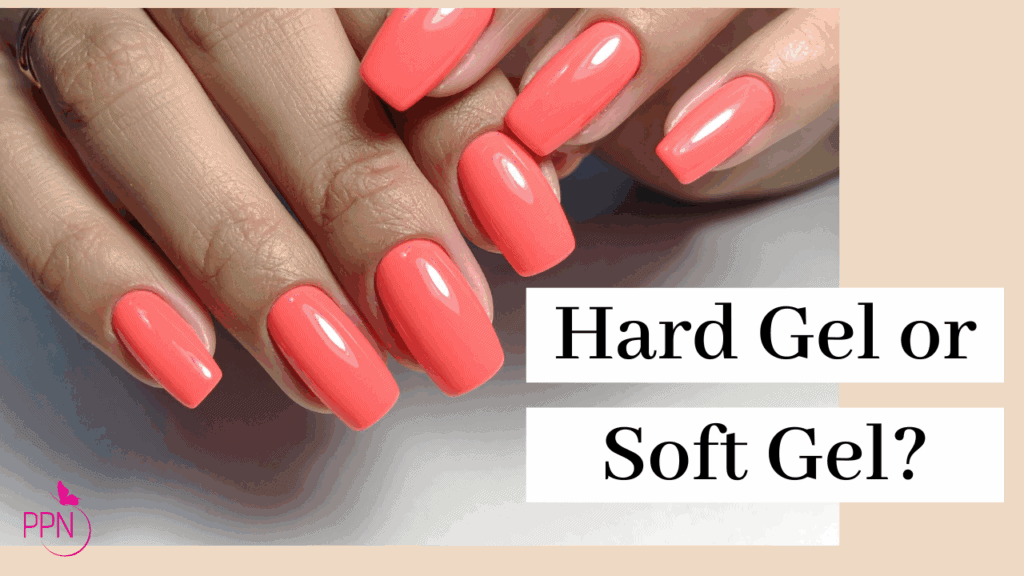
But before I do, don’t forget that a soft gel is one that is flexible and can be soaked off in acetone while a hard gel is rigid and cannot be soaked off in acetone.
I’m a Japanese gel specialist. I’ve worked with Japanese gel brands predominantly through my years as a salon tech and also as an educator now– and I can tell you that these brands are soft gel focused.
However, one of my most favorite Japanese Gel brands Leafgel Premium, approximately 3 years ago now, introduced hard gel to their line up, in the form of top gel. Top Gel Brilliant in the Leafgel brand is hard gel. Prior to introducing this top coat, Leafgel Premium was exclusively a soak-off potted gel system.
Another Japanese gel brand I’ve worked with sporadically over the last 10 years is PRESTO, and they are one of the very few Japanese gel brands whose builder gel and top coat are hard gels. Yet their base coats and color gels are soft gel.
And then you have European gel brands…
European nail gel brands also combine soft gel and hard gel within their nail systems. The builder and their top coats are usually hard gel, but their base coats and color gels are typically soft gel, AKA soak-off.
I am an American nail artist. I grew up with American nail systems. And when I came into the world of nails, soft gel and hard gel were strictly divided.
You had to choose, or use both in your salon… And guess what? Neither gel polish or hard gel worked well across all of my clients.
Gel polish (so gel products with polish-like ingredients) were too thin and too hard which is why they often chipped or lifted on clients.
Hard gel systems, I’m talking as a system– so the base, the colors, the builders, and the top coats… Were simply too hard of a combination on most of my clients’ nails.
And the truth is that nail enhancements need a little flexibility or they will start lifting (… and don’t get me wrong, too soft of a nail gel is also an issue).
American ard gel systems, in my experience, also required a lot of fine-tuning, but if you filed too thin, then you would start experiencing issues. And if you didn’t fine-tune enough, the nails would end up bulky.
And so American gel polish and hard gel systems became a hard pass for me then.
I was ready to quit on nails. Literally.
I wanted consistent results, and I wanted them across my entire clientele. No budging.
You wouldn’t want to own an auto body shop doing paint jobs on cars that are very expensive, and only last on about 60% of your clientele. The bad rep of your business would supersede your successful applications.
Likewise the nail client.
Nails are not cheap, and that client is also paying with their time. They expect and deserve a long wearing result for their money and time investment.
All of my problems were solved when I found structure soft gel.
My specialty was in short to medium natural length nails. And structure soft gel systems like Bio Sculpture and most Japanese gel brands had, and continue to have soft and semi-hard rigidities that allowed me to properly overlay my client’s nails.
But now brand behaviour is trending towards having both soft and hard gel work in tandem with each other. Branding ourselves in one category, soft gel or hard gel, is becoming obsolete. It’s no longer necessary.
Especially for our clients, most, all they want is beautiful long wearing nails that look and feel like their very own, and that last a long time.
And structure gel, or builder gel, can give that client that result.
Clients more than ever are inquiring about builder gel. They are becoming aware that there is a gel out there that is going to give them the nails of their dreams.
Our job is to determine what level of rigidity they need, a soft, semi-hard, or hard gel.
I will say that structure soft gel systems are more beginner friendly, while hard gel requires a little more experience, and for that reason I still do recommend that entry-level nail artists start with structure soft gel (quality brands like Bio Sculpture, and Japanese and Korean gel brands) and gradually move into hard gel builder.
Regardless…
We are in a gel boom! So much so the news keeps finding ways to mess with us.
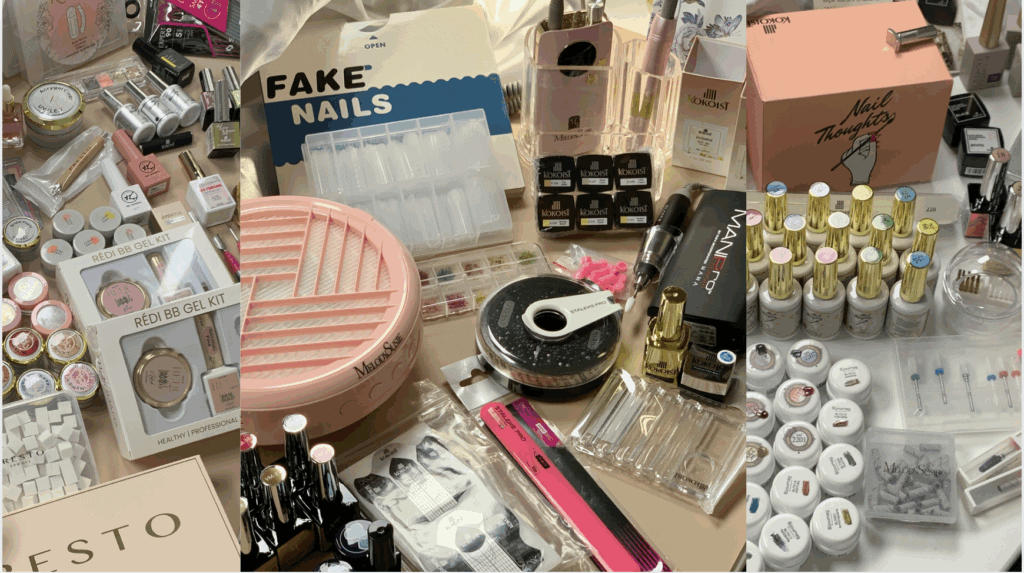
But here’s the real problem that we as professionals are going to face.
As the popularity for structure gel increases… How are you going to stand out?
I’ll give you 4 ways you can future-proof your business for competition:
1- Hold the line
Meaning, there is a market average for what a client can expect to pay for a structured gel overlay. I would say it’s approximately nothing less than $60 for 90 minutes of your time. Obviously, you need to do your overhead calculations and price more exact. And holding the line, means that you do not start competing with your fellow nail techs, and undercut each other. That usually leads to a raise to the bottom. And no nail tech can afford to go back to $25 sets.
2- Be a treat to visit.
At the end of the day we are in a service industry. Seeing you for an appointment should be one of the most exciting things in your client’s calendar. Check your vibe, and your ambience.
3- Offer unique products
I think more than ever you are going to want to distinguish yourself by using premium recognized brands and I believe clients are going to want branded services as everyone starts offering builder gel with meh and vague brands.
I believe that certifications are going to be on the rise for this reason. Premium recognized brands also often have a salon locator, which allows you, after taking a brand certification, to be listed and found by new clients. You can sign up for my newsletter HERE to stay in the know of my upcoming brand certifications.
Along with branded products, I believe niche products are also going to set you apart more than ever, which is why I couldn’t recommend niching into Japanese gel brands. They’re just so fun, so niche, and create lots of client curiosity and loyalty.

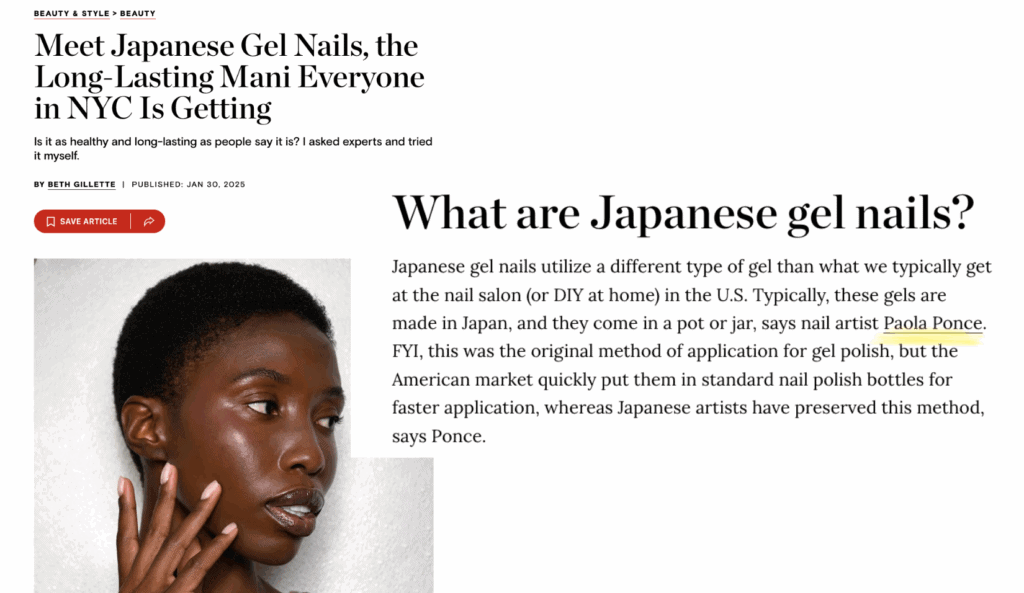
Not to mention that the Japanese gel manicure has gone mainstream. We’ve been mentioned both on Allure and Cosmopolitan Magazine.
And lastly…
4- Skill level.
Assuming you’ve nailed retention, once you reach a skill-level that just cannot be duplicated in your area, you’ve sealed your business for lifetime success. The precision of your application or the nail art you create is something your client can’t get anywhere else.
So soft gel or hard gel?
Both.
Brands are doing both. You can do both.
Find your brand or two and specialize in a high value niche, a product or service with perceived high value and that cannot be easily obtained. Then, hone in on your skill-level with these products and services to future-proof your structure gel business.
If you want to dive deeper into this topic, I created a free training that is going to further guide you in finding your high value niche, and the path that my students are finding to achieve long wear and booked-solid success.
You can find the training HERE✨
Thank you so much for tuning in! Stick around for our next topic, and don’t forget to sign up for the newsletter to stay in the know.
I’ll see you in the next one.

Paola Ponce is a licensed nail tech of 10+ years and a certified Japanese gel educator.
Learn more about her journey as a specialized gel nail artist and her gel nail application course inside her free masterclass here.
These blogs are copyrighted material, and any use of this blog is not permitted without written consent first. Some of these blogs contain affiliate links that give us a small commission when qualifying purchases are made. Thank you for your support, which helps us to continue creating valuable resources and content like this.